Flow Physics™ is the operational framework behind When Beds Don't Move. It connects hospital throughput, operational efficiency, and process improvement by reducing operational friction and strengthening execution across the support-services chain.
Built on First Movement Time™, Activation Windows™, and a seven-engine model of hospital flow.
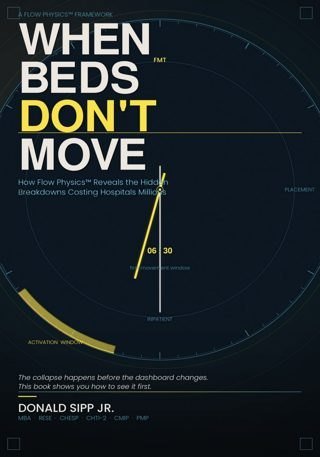
Hospital throughput is not a scheduling problem - it's a physics problem. Flow Physics™ models how beds, teams, and information actually move, and where that movement breaks down.
The critical interval between when work becomes available and when it actually begins - the hidden delay most hospitals never measure.
The recurring windows when demand surges and response capacity must already be in position - not assembling after the fact.
A seven-engine model of hospital flow: the interdependent operational systems that must run in rhythm for patients to move.
EVS → Transport → Nursing. When the chain runs in rhythm, beds turn and the ED decompresses. When one link slips, the whole system stalls.
The governing principles of how flow systems behave - and how they break under pressure. Explored in depth in When Beds Don't Move.
Frameworks only move beds when frontline teams are trained to execute them - which is why Flow Physics™ pairs with ITC's transport training and certifications.
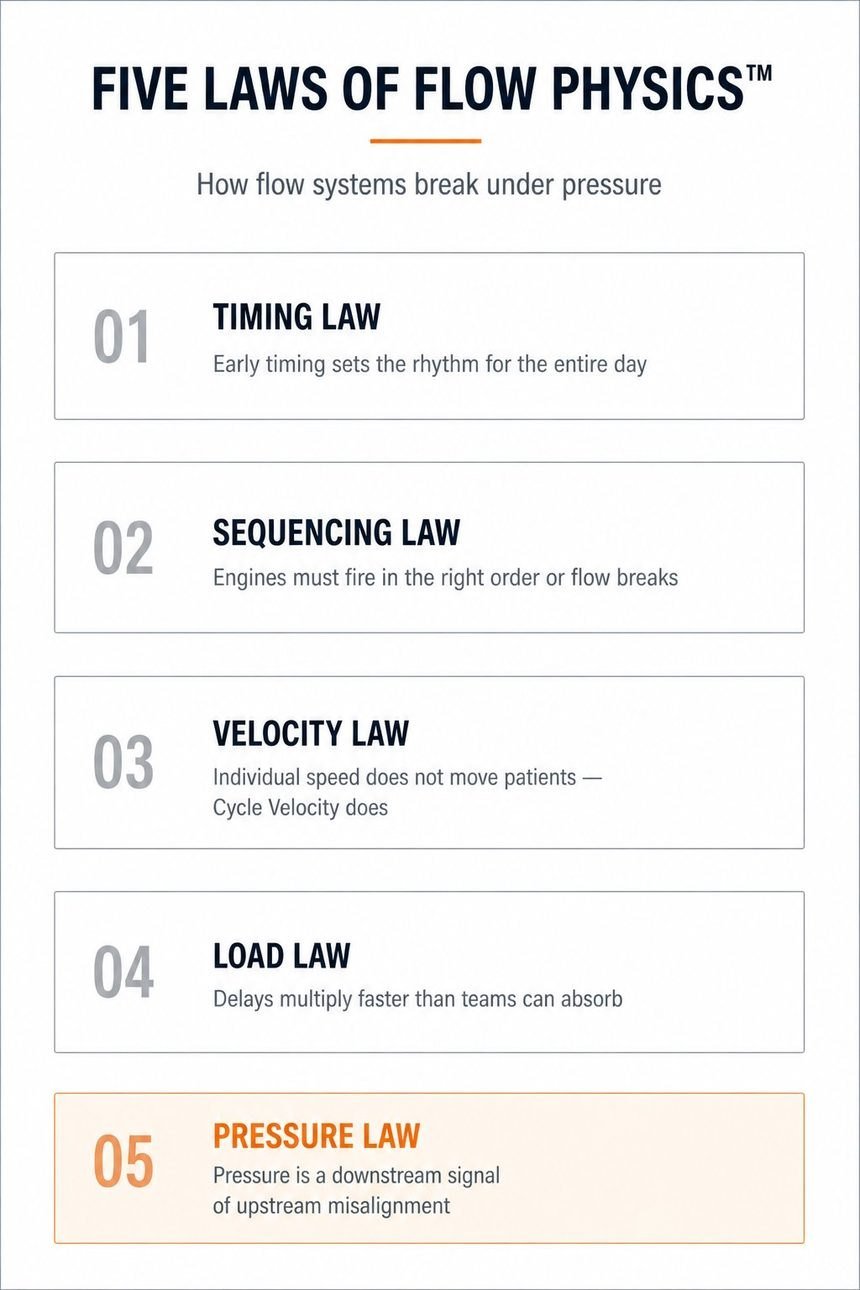 The Five Laws of Flow Physics™ - how flow systems break under pressure.
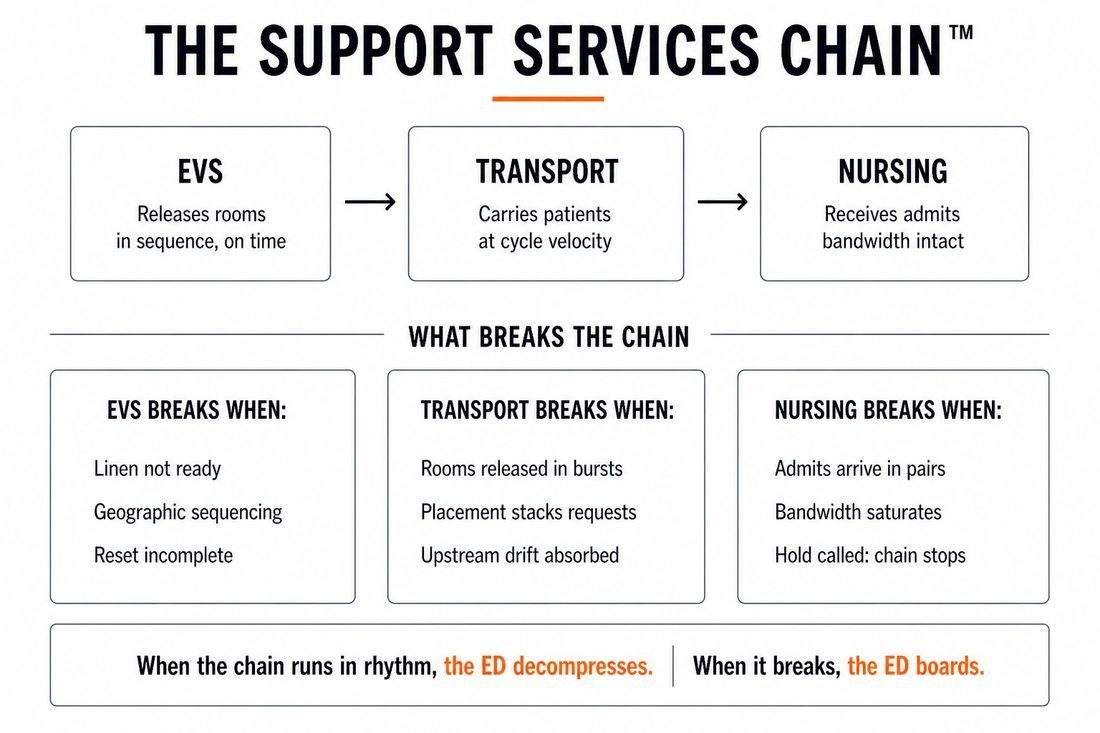 The Support Services Chain™ - EVS → Transport → Nursing. In rhythm, the ED decompresses.
Example results from one documented engagement at a 450-bed tertiary-care teaching hospital.
Example results from a single documented engagement. Operational outcomes vary by facility, staffing model, and baseline conditions.
When Beds Don't Move lays out the full framework - the Five Laws, the engines, and the support-services chain - with the operational playbook behind them.
When Beds Don't MoveWhen Beds Don't Move: The Course teaches the framework in six self-paced modules, with animated figures, practice labs, and CE hours toward CHTI and CPTMP renewal. Lesson 1 is free.
See the coursePatient Flow Consulting applies Flow Physics™ directly to your hospital - diagnosing where flow breaks and rebuilding the support-services chain around it.
Patient Flow Consulting